From the Maths and Entrepreneurship Learning Area
There is no doubt that the main objective of education at St Mary’s DSG is the passing down of the curriculum and the knowledge and skills associated with this to our students. Just as important as this transfer of knowledge and skills is an often-overlooked part of education that happens daily: the hidden curriculum.
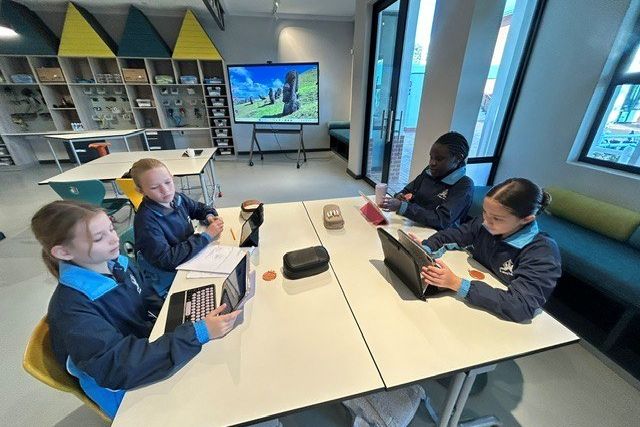
The hidden curriculum refers to those skills, values and beliefs that are passed through to our students, not because they are explicitly taught, but rather because of social interactions, engagement with educators, completion of tasks, especially under time constraints, and allowing our students to investigate and navigate in uncertain circumstances in a safe way.
Often the published information about subjects focuses on the flashy, outstanding, yet small moments where the outcomes of a project are completed or where an extraordinary lesson takes place outside of the norm. This, however, only represents a small part of the education at St Mary’s DSG with most of the time being taken up with preparing students for life beyond school, both through teaching the curriculum and facilitating the effective incorporation of the hidden curriculum into our teaching.
I believe that it is important that from time to time we acknowledge the important work that is being done by both our students and teachers outside of the momentary skills that are part of our regular communication. The hidden curriculum includes aspects of life that encompass societal norms such as honesty and respect (our school values) but also the so-called soft skills that have become a regular talking point in every sphere of society. The most important of these soft skills is an ever-shifting debate but from my point of view the following may be considered: creativity, problem-solving through critical and analytical thinking, reading and appropriately responding to social cues, effective communication, determination and resilience in the face of challenges.
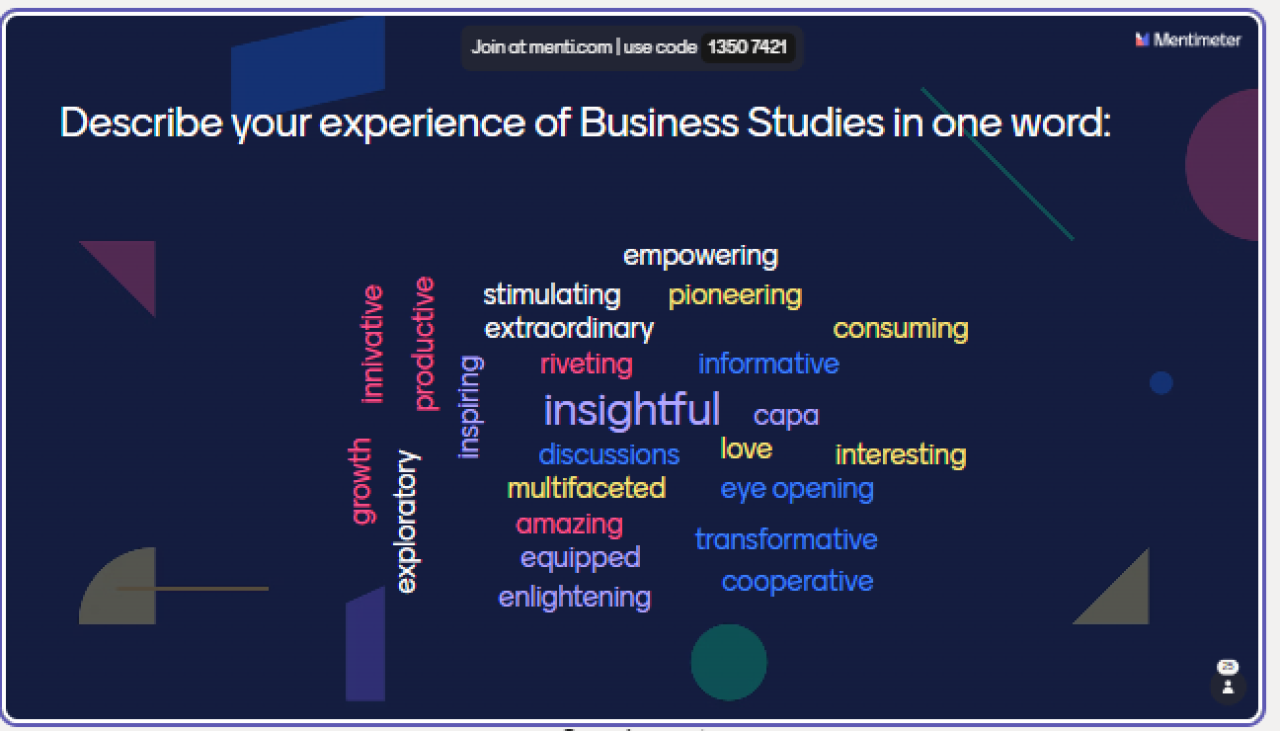
I have witnessed the hidden curriculum being engaged with and promoted in many different ways and in all of the different subjects that this Learning Area encompasses. In Mathematics, I have seen critical and analytical thinking being promoted through by showing the origins of theorems, by questioning the assumptions made in Mathematics each day and by asking “why” rather than just “how”. In Mathematical Literacy I have seen determination and resilience promoted through a culture of “doing” Maths, just in a slightly different way. In Business Studies I have seen the promotion of collaboration and working effectively as a member of society through teaching professionalism, timeous submission of work and discourse about questions that can be answered from a variety of perspectives. In Accounting I have witnessed respect being fostered through questions and answers where students raise their hands and wait their turn to be questioned, thus giving everybody a voice in the classroom. In Consumer Studies I have witnessed creativity taken to the maximum levels through a multitude of practical tasks including using old clothes to make new, functional objects and through allowing students the freedom to design and execute their own recipes, not just through cooking and eating, but through market research, consideration of sustainability, costing and practicality. This all happens within a space where a deep curriculum is taught daily.
The students and teachers engaged in this Learning Area are phenomenal individuals and to each of them I would like to say, thank you! Thank you to the students for being open to learning and thank you to the teachers, who know who they are, for being open to teaching! It has been a privilege to witness the multi-faceted education being provided at St Mary’s DSG. This school is an institution to be proud of!